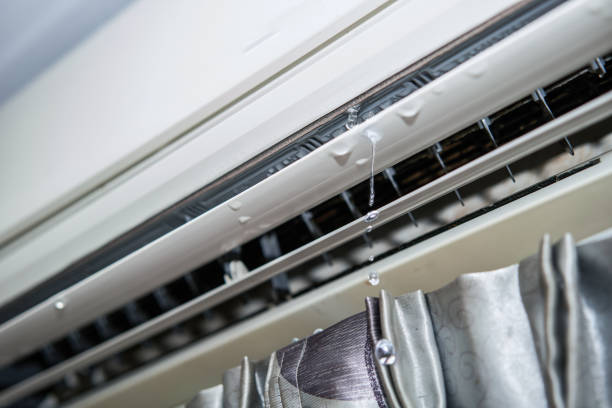
There are only a few things more alarming than walking into your lounge room and finding water dripping from your split-system air conditioner. Or noticing a damp patch forming on your wall or ceiling below the indoor unit. Or hearing the sound of water pooling somewhere inside the unit itself.
AC water leaks inside the home are among the most common service calls we receive from Brisbane homeowners, particularly during summer and the buildup season. The good news is that most causes are well understood, and many are completely preventable with regular servicing.
Here’s what’s actually going on when your AC leaks water indoors, and how to tell when it’s a simple fix versus something that needs a licensed technician.
Why Do Air Conditioners Produce Water in the First Place?
Your air conditioner removes moisture from the air as it cools your home. When warm, humid air moves over the cold evaporator coil inside the unit, water forms on the coil, similar to how a cold drink sweats on a hot Brisbane day.
This water collects in a drain pan and then leaves your home through a condensate drain line, usually running through the wall to the outside.
When that system works correctly, you never see or think about the water. When something interrupts that process, the water has nowhere to go except into your home.
The Most Common Causes of Indoor AC Water Leaks in Brisbane
Blocked or Clogged Condensate Drain Line
This is by far the most common cause of AC water leaks in Brisbane homes, and it’s almost entirely preventable with regular cleaning.
Brisbane’s warm, humid climate creates ideal conditions for algae, mould, and sludge to grow inside the condensate drain pipe. Over time, this buildup restricts or completely blocks the drain, causing the drain pan to overflow.
Signs it’s the drain line:
- Water dripping from the front or bottom of the indoor unit
- A musty smell is coming from the AC
- Visible water staining on the wall beneath the unit
- The unit is still cooling, but water is escaping
Fixing a blocked drain line is a common and simple repair. A technician will flush and clear the drain and might use an algaecide to help prevent it from clogging again soon.
Dirty or Blocked Air Filter
If your filter is very dirty, it can block airflow over the evaporator coil. When this happens, the coil can get too cold and freeze. When the unit shuts off or the ice melts, it can release more water than the drain pan can handle, causing overflow.
Signs it might be the filter:
- Reduced airflow from your AC vents
- Ice visible on the indoor unit or copper pipes
- Water leaking intermittently rather than continuously
- The unit seems less effective at cooling
The fix here is to clean or replace the filter. Most Brisbane homeowners should be cleaning their split-system filters every four to six weeks during heavy-use periods. If you can’t remember the last time yours was cleaned, that’s probably where to start.
Frozen Evaporator Coil
A frozen coil can be caused by a dirty filter as above, but also by low refrigerant levels, restricted airflow from blocked vents or returns, or a failing fan motor. When the coil freezes and then thaws, the volume of water released can be significant.
Signs of a frozen coil:
- Ice visible on the indoor unit or the copper pipe running to the outdoor unit
- The AC blowing warm air despite being set to cool
- Water leaking during or after the AC is switched off
- Reduced airflow even after cleaning the filter
If your coil is frozen for any reason other than a dirty filter, you’ll need a technician to find out why. Low refrigerant is a pressurised gas and must only be handled by a licensed professional.
Disconnected or Cracked Drain Pan
The drain pan under the evaporator coil can crack, rust, or shift out of place over time. This happens more often in older units or those that have been bumped or installed incorrectly.
Signs it’s the drain pan:
- Water leaking from an unusual location on the unit, not just the front
- Dripping even when the drain line appears clear
- Visible rust or cracks when the unit panel is opened
If the drain pan is cracked or broken, a technician will need to replace it.
Improper Installation
If your air conditioner wasn’t installed with the right slope, water can pool instead of draining away. The indoor unit should have a slight backward tilt so water flows toward the drain.
This is especially important for Brisbane homeowners whose unit was installed by someone uncertified or in a hurry. If your unit has leaked since it was installed, it’s worth checking the installation angle.
Low Refrigerant Levels
Low refrigerant makes the evaporator coil run too cold, which can cause ice to form and then leak when it melts. Refrigerants shouldn’t run out during normal use, so low levels indicate a leak or that the unit wasn’t filled properly during installation.
This isn’t something you can fix yourself. In Australia, only someone with a current ARC Tick licence can handle refrigerants. If you think your unit is low on refrigerant, a licensed technician should find and fix the leak before refilling the system.
What to Do Right Now if Your AC Is Leaking
If you’ve just noticed your AC leaking water inside, here’s what to do immediately:
- Turn the AC off to prevent further water damage and allow any ice to melt safely
- Place towels or a bucket to catch and contain water while you arrange a repair
- Check your filter and clean it if it’s visibly dirty
- Check the condensate drain outlet outside the home if you can safely access it, and see if water is draining from it normally
- Don’t turn the unit back on until you know what’s causing the leak, especially if you think there might be ice or refrigerant problems.
When Does a Water Leak Become an Emergency?
Most AC water leaks are annoying but not urgent. However, you should call a technician quickly if:
- Water is making contact with electrical components, power points, or wiring
- The leak is significant enough to cause structural damage or saturate the wall or ceiling materials
- You can see or smell signs of mould developing from ongoing moisture
- The unit is sparking or tripping your circuit breaker in addition to leaking
Ideal Refrigeration & Appliance Services offers after-hours emergency repair options for situations like this across Brisbane.
How to Prevent Indoor AC Leaks
It’s much easier and cheaper to prevent leaks than to fix them. Here’s what Brisbane homeowners can do:
- Clean your filters every four to six weeks during summer, monthly during peak humidity
- Book an annual service that includes checking and flushing the condensate drain
- Keep return air vents unobstructed by furniture or curtains
- Don’t block the outdoor unit with plants, debris, or stored items that restrict airflow
- Take action early if you notice your unit working harder than normal or if the airflow drops.
When you book a professional air conditioner service with Ideal Refrigeration & Appliance Services, we’ll inspect and flush the condensate drain, clean the filters, check the coil, and do a full system health check.
Stop the Drip Before It Becomes a Bigger Problem
If your AC is leaking water, it’s a sign that something needs fixing. Ignoring it usually leads to bigger problems for both your unit and your home.
Our team at Ideal Refrigeration & Appliance Services offers fast and thorough air conditioning repairs and servicing across Brisbane. We’re licensed, experienced, and available after hours when you need us most. Call 0428 149 923 or book online to get your AC checked and fixed today.
Frequently Asked Questions
Is a small amount of water dripping from my outdoor unit normal?
Yes, it’s completely normal for water to drip from the outdoor unit. The outdoor unit removes heat and moisture, so condensation and dripping are expected, especially on humid Brisbane days.
Can I unblock the condensate drain myself?
You can try flushing the drain line with a bleach-water mixture if you know where the drain access point is. But if the blockage is bad or you’re not sure what’s causing the leak, it’s best to have a technician check the system.
How much does it cost to fix an AC water leak in Brisbane?
The cost depends on what’s causing the leak. Clearing a blocked drain line is usually quite affordable. Replacing a drain pan, refilling refrigerant, or fixing a faulty fan motor will cost more. You’ll always receive an upfront quote from Ideal Refrigeration & Appliance Services before any work is done.
My AC has been leaking for a few weeks but still cools fine. Should I still get it checked?
Yes. If your AC has been leaking for weeks, even if it still cools well, it can cause hidden water damage to your walls, ceilings, and insulation. It also means there’s a problem that could get worse. Don’t put it off.
Does Brisbane’s humidity make AC water leaks more common?
Absolutely. Brisbane’s subtropical climate means air conditioners work harder to remove moisture, and the warm, humid conditions cause more buildup in the drain lines. Units also run for more hours each year, so drain problems are more common than in drier places.