
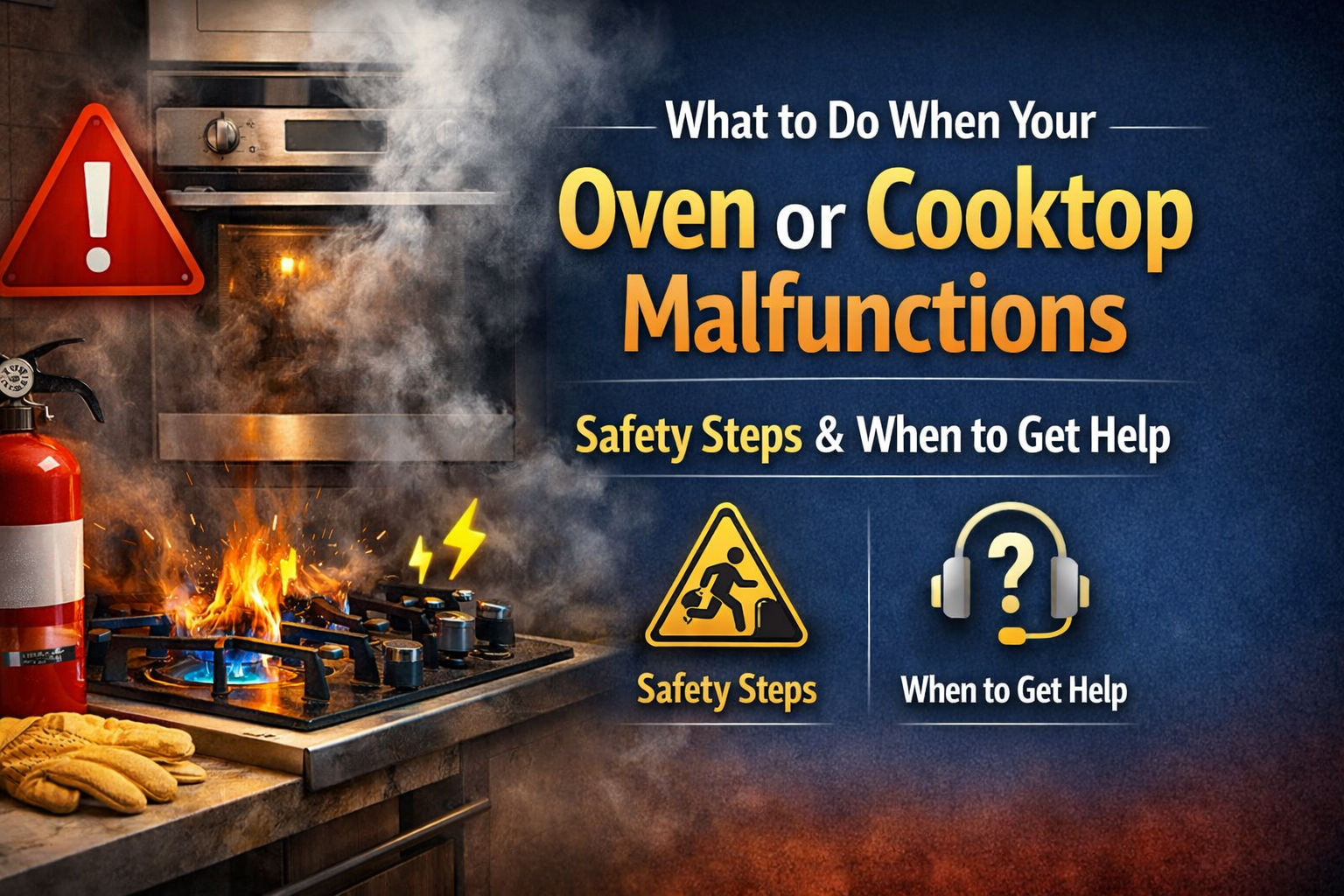
Oven or cooktop issues can show up out of nowhere. While cooking, you may notice a drop in heat, a flickering flame, or a sudden loss of power. You stop and wonder whether to wait or just turn everything off.
Most people have felt that hesitation. At first, it just feels like an unexpected and annoying delay. Soon, questions come up. Is that smell normal? Should the cooktop be clicking? Why does the breaker trip every time the oven heats up? What starts as a cooking problem can quickly become a safety concern.
In these moments, people often have to guess what to do. Some problems are minor and go away quickly. Others are early signs that something could be unsafe. The hard part is knowing when to take action, especially when you are unsure.
This guide offers support in these situations. It explains warning signs, what you can safely check, and when to contact a professional. Clear guidance can help you manage these moments with confidence.
Immediate Safety Steps: What to Do First
Always put safety first before trying to fix anything. The following steps help lower immediate risks and prevent injuries, fires, or other serious problems.
-
If You Smell Gas (Critical Emergency)
Never ignore a possible gas leak, even if the smell is faint or only appears sometimes.
Turn off the gas supply right away, either at the appliance valve or the main shutoff if you can reach it safely. Do not touch light switches, power points, or your phone while you are still inside. Even a small spark can cause trouble.
Open windows and doors quickly to let in fresh air, then get everyone out of the house, including pets. Once you are outside, call your gas provider’s emergency line. Emergency support is available 24/7. Do not go back inside until a licensed gas fitter says it is safe.
It’s a good idea to save your gas provider’s emergency number in your phone now, before you need it.
-
If You See Smoke or Flames
If smoke or flames are coming from the oven or cooktop, switch the appliance off at the power point or circuit breaker if it is safe to do so. Never throw water on electrical or grease fires. Use a fire blanket or extinguisher if you have one.
If the fire spreads or feels unmanageable, call 000 immediately. Smoke fills rooms faster than people expect. Close the door to contain it as you leave and get out.
-
For Electrical Issues (Sparks, Burning Smell, Tripped Circuit)
An electrical fault often announces itself with sparks, a sharp burning smell, or repeated circuit breaker trips.
Switch off the power at the circuit breaker straight away. Do not touch the appliance if you suspect live wiring. Only unplug it if there is no visible damage to the cord or plug.
Keep others away from the area. A useful habit here is to take a quick photo of any visible damage. It can help with insurance and speed up diagnosis later.
-
General First Response Checklist
-
- Turn off the appliance at the power or gas source.
- Let fresh air into the area.
- Move anything that can catch fire away from the area.
- Do not try to use the appliance again.
- Write down what happened, including any smells, sounds, and when they occurred.
Common Oven and Cooktop Malfunctions Explained
Understanding what might be going wrong helps you communicate clearly with a technician and judge urgency.
-
Electric Oven and Cooktop Issues
An oven malfunction where the unit does not heat evenly often points to a faulty heating element, thermostat, or control board. You might notice the element not glowing or temperatures drifting. This is usually low risk if powered off and can wait for professional assessment.
Cooktop elements that fail to heat at all may be burnt out or suffering from wiring issues. Cracks or discolouration increase the risk. Turn the power off at the breaker and arrange for cooktop repair.
A circuit breaker that keeps tripping is a clear signal that something is wrong and should not be ignored. Repeated trips often indicate an internal short. Keep the power off and call a licensed electrician.
Strange buzzing or clicking sounds are not always urgent, but if you also notice odd smells or the appliance is not working right, stop using it and arrange for a check-up.
-
Gas Oven and Cooktop Issues
Burners that will not ignite are often caused by blocked igniters or spark modules. If there is no gas smell, this can usually wait for a gas fitter.
Yellow or orange flames are a serious warning. Gas flames should always be blue. If you see a different color, it means the gas is not burning properly and could produce carbon monoxide. Stop using the appliance right away.
Uneven or weak flames often come from blocked burner ports. Cleaning may help, but persistent issues need professional attention.
Continuous clicking after ignition is usually minor and sometimes moisture-related, but it should still be checked if it persists.
If you smell gas only when the oven is on, that is still a red flag. Gas should never accumulate, even briefly.
-
Issues Affecting Both Types
If the door does not close properly, your oven will not work efficiently and could suffer heat damage over time. If the control panel stops responding, try resetting it, but if this keeps happening, there may be a bigger problem. Oven lights are usually a minor issue, but always wait until the oven is cool before changing the bulb.
DIY Troubleshooting: What You Can Safely Check Yourself
First, a quick but important reminder: only check your appliance when it is completely cool, switched off, and unplugged, or when the gas supply is fully turned off. Never work on live electrical parts or gas connections. Taking shortcuts can turn a simple problem into a serious safety risk.
Simple Checks Before Calling a Professional
Sometimes the problem is simple. It is not always the case, but it happens often enough that it is worth checking these things before calling for service.
-
For Electric Ovens and Cooktops:
Begin by checking the switchboard. A tripped circuit breaker might seem serious, but it is often easy to fix. Plug a different appliance into the same outlet to confirm the power supply is working. Make sure the power cord is undamaged and plugged in securely. If you see error codes on the display, write them down and check the manual. Sometimes, turning off the power at the circuit for about a minute can fix small control problems.
-
For Gas Ovens and Cooktops:
Make sure the gas supply valve is fully open. It sounds obvious, but it gets missed more often than people admit. Check whether other gas appliances are working to isolate the problem.
When everything is cool, gently clean burner ports with a soft brush and ensure burner caps are seated correctly. Look at the igniter for visible damage or food debris that may be interfering.
-
Universal Checks:
Pull out the appliance manual and see what it says about your specific symptoms. Check the warranty status and whether any recalls are listed on the manufacturer’s website.
Take photos of any error codes or visible damage. This can be helpful later, especially if the problem gets worse or comes and goes.
What NOT to Do (Common Mistakes That Worsen Problems)
This is where caution matters most:
- Do not open or dismantle internal components unless you are properly licensed.
- Never work on electrical components while the appliance is plugged in.
- Do not test gas connections using flame, smoke, or improvised methods.
- Avoid temporary fixes such as tape, loose wiring, or bypassing safety features.
- Do not continue using an appliance that is already showing signs of malfunction, even for a single use.
- Never attempt to adjust or repair gas regulators or valves yourself.
When a problem persists, ignoring it usually allows the risk to grow rather than resolve.
When to Call a Professional: Red Flags You Shouldn’t Ignore
There is a clear point where DIY ends and professional help begins. Recognising that point early can prevent damage, injury, or worse.
-
Immediate Professional Help Required (Same Day)
Gas-Related Emergencies:
Any gas smell, even if it comes and goes. Yellow or orange flames. Hissing sounds. A suspected gas leak at the connection points.
Electrical Hazards:
If you notice sparks, arcing, burning smells, exposed wires, frequent breaker trips, or scorch marks near plugs and outlets, these are clear signs of an electrical fault. Do not wait to address them.
Fire or Heat Damage:
If you see melted wires, charring, overheating on the outside, or smoke coming from inside the appliance, get help right away.
-
Schedule Professional Repair Soon (Within Days)
Some problems are not instant emergencies, but should not linger. A control panel that no longer responds, oven temperatures that are wildly inaccurate, broken doors or seals, or intermittent faults that are becoming more frequent all fall into this category. If the appliance is less than 10 years old and from a major brand, repair is often worthwhile.
-
Why Professional Repair Matters in Australia
Licensed electricians are required for electrical appliance work under AS/NZS 3000, and only licensed gas fitters can handle gas appliances under AS/NZS 5601.
Doing repairs yourself can void warranties and insurance, and may cause legal problems if things go wrong. Hiring a professional means you get the right diagnosis, genuine parts, compliance with Australian standards, proper safety certification, and work that is backed by a warranty.
How to Choose the Right Appliance Repair Service in Australia
Repair services can vary in the level of care, honesty, and safety they provide. It’s important to choose carefully.
-
Essential Credentials and Qualifications
For Electrical Appliance Repairs:
Look for a licensed electrician, an Electrical Contractor’s Licence for the business, public liability insurance, and manufacturer authorisation if warranty work is involved.
For Gas Appliance Repairs:
Ensure the technician is a licensed gas fitter with Type A General Gas Fitting credentials, holds the required plumbing licence, can issue a Certificate of Compliance, and carries public liability insurance.
-
Questions to Ask Before Booking
Ask whether they are licensed in your state, whether they service your appliance brand, what the call-out and diagnostic fees are, and whether they offer emergency service. Ask about warranties on parts and labour, whether genuine parts are used, if written quotes are provided, and whether they are fully insured.
-
Red Flags to Avoid
Be cautious of services that cannot provide licence numbers, avoid written quotes, push replacement as the only option, charge far less than competitors, lack reviews or online presence, insist on cash-only payments, or offer no warranty or follow-up support.
Repair vs. Replace: Making the Right Financial Decision
In some cases, repairing your appliance is the best option. Other times, replacing it is smarter. The key is figuring out what’s right for you.
-
Factors to Consider
If your appliance is less than five years old, it’s usually worth fixing. For those between five and ten years, consider the repair cost and the type of problem. If it’s over ten years old and breaks down often, replacing it might save you money.
If the repair cost exceeds half the cost of a replacement, consider replacing. Multiple repairs within 12 months also point that way. Factor in potential energy savings if a newer appliance would reduce running costs.
Australian averages provide a useful guide. Heating elements, thermostats, igniters, control boards, seals, and gas valves all vary in cost. A practical benchmark some people use is the repair cost divided by appliance age. If it exceeds $100 per year of age, replacement should be considered seriously.
-
When Replacement Makes More Sense
Replacement is often the better option when an appliance is over 12 years old with major component failure, when multiple systems fail at once, when parts are no longer available, or when repeated repairs approach 60 percent of a new appliance’s cost. Ongoing safety concerns also weigh heavily here.
Preventive Maintenance: Keeping Your Oven and Cooktop Running Safely
Breakdowns usually don’t happen all at once. Problems tend to develop over time.
-
Monthly Tasks (15 minutes)
Wipe the cooktop and clean up oven spills before they harden. Check the door seals and make sure ventilation openings are clear. For gas appliances, clean the burner caps and ports, and make sure the flames are blue. For electric appliances, check the elements, knobs, and indicator lights, and clean them as needed.
-
Every 6 Months (30 minutes)
Give the oven interior a deep clean, check the hinges and seals, use a thermometer to test the temperature accuracy, clean the rangehood filters if you have them, and make sure the oven light is working.
-
Annual Professional Servicing
A professional service can spot small issues before they become big problems. This usually covers gas safety checks, leak and electrical testing, calibration, checking safety switches, and cleaning inside the appliance.
It typically costs between $120 and $200, helping you avoid bigger bills later. Many Australian insurers also require proof of maintenance if you make a claim for your appliances.
Understanding Your Rights: Australian Consumer Guarantees
Understanding your rights can help you avoid stress if something goes wrong.
-
Australian Consumer Law Protections
Appliances should be good quality, do what they’re supposed to, match their description, and last for a reasonable time.
For major faults, you are entitled to a repair, replacement, or refund, and may also claim compensation for related losses. These protections apply even if the manufacturer’s warranty has expired. They exclude issues caused by everyday wear, improper use, accidental damage, or lack of proper maintenance.
-
Warranty vs. Consumer Guarantees
Manufacturer warranties usually last one to two years and cover defects under specific conditions. Consumer guarantees apply automatically and often last longer than the warranty for major appliances, depending on what’s reasonable for their lifespan. These rights can’t be taken away. If you keep your receipts, warranty papers, service records, and photos of serial numbers, it’s much easier to use these rights if you need them.
Frequently Asked Questions
How quickly should a professional respond to an oven or cooktop malfunction?
Same-day response is appropriate for safety-related issues. Non-urgent faults are typically handled within a few days.
Can leaving a faulty oven or cooktop plugged in cause a fire?
Yes. Internal components may remain energised, and unresolved faults can overheat even when not in use.
How much does emergency oven or cooktop repair cost in Australia?
Emergency repairs often start around $200–$300, with costs varying based on fault severity and timing.
Is it worth repairing an oven that’s 8 years old?
Often yes, particularly if the repair cost is well below replacement and the appliance has been reliable.
What should I do if my rental property’s oven or cooktop breaks down?
Notify your landlord or property manager immediately. Isolate the appliance if there is any safety concern.
Can I use my oven if only one element is not working?
It depends. If heating is unpredictable or uneven, continued use during an oven malfunction is not recommended.
How can I tell if my gas cooktop is leaking?
Gas smell, slow ignition, or unstable flames are warning signs. Turn off the gas and seek professional help.
Do I need a licensed professional, or can any handyman fix my oven?
Gas and electrical repairs must be carried out by licensed professionals. This is essential for safety and compliance.
Trust the Experts at Ideal Refrigeration & Appliance Repairs In Brisbane
When an oven or cooktop fails, it happens mid-routine, not on schedule. Cooking stops, plans unravel, and you are left deciding whether it is a minor disruption or a sign of something unsafe. In moments like that, having the right repair team matters.
This is where a dependable repair team makes a real difference. Ideal Refrig Appliance works with households across Australia to resolve appliance problems carefully and correctly, focusing on safety first and long-term reliability rather than quick fixes.
Why Choose Ideal Refrigeration & Appliance Services?
- Fully licensed technicians for both electrical and gas appliance repairs
- Experience with all major oven and cooktop brands, including European and Australian models
- Same-day response for urgent faults and sensible scheduling for standard repairs
- Clear explanations of the issue before any work begins
- Clear pricing provided upfront, with no hidden fees or unexpected extras
- Honest advice when repair costs approach replacement value
- Use of genuine, manufacturer-approved replacement parts
- Repairs carried out in line with current Australian safety standards
- 12-month warranty on parts and labour for added peace of mind
- Ongoing support if issues arise after the initial repair
This approach keeps the process straightforward and helps ensure your appliance is not just working again, but safe to use with confidence.
Don’t Leave Safety To Chance! Contact Us Today
At Ideal Refrigeration & Appliance Services, safety and clarity come first. When an oven or cooktop starts to fail, it is not always obvious how serious the issue might be, or how quickly it could escalate.
Whether you are dealing with an appliance that has stopped working altogether or one that is showing early warning signs, our team provides careful assessments and reliable repairs that address the problem properly, not temporarily.
If something does not feel right, it is worth having it checked sooner rather than later.
Call 0428 149 923 to speak with an experienced technician, or book your service online. We are ready to help you restore safe, dependable use of your oven or cooktop.