

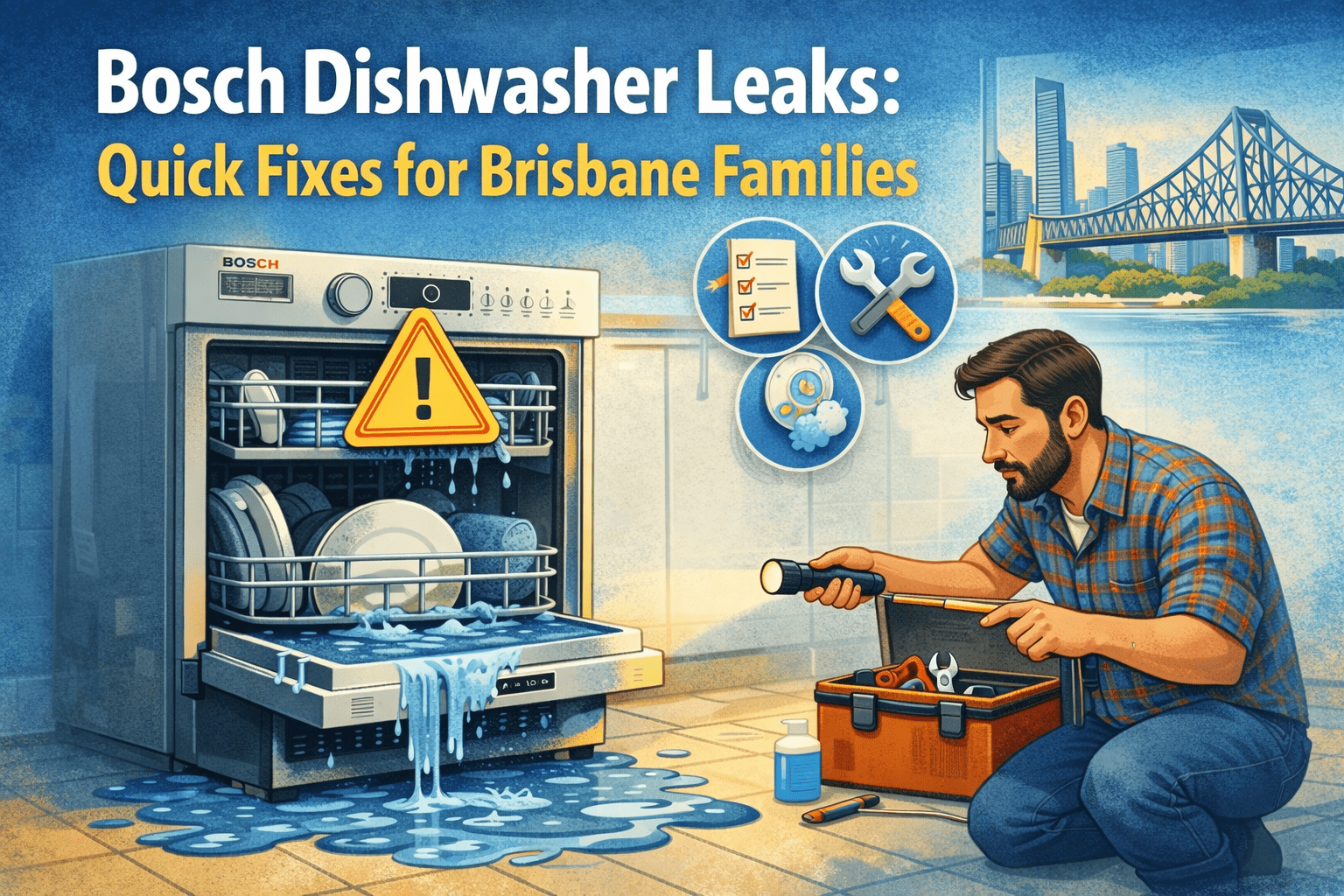
There’s nothing like finishing dinner, loading the dishwasher, and returning to find a puddle spreading across the kitchen floor. Leaks are inconvenient for Brisbane families that rely on Bosch dishwashers for daily use. They can damage flooring and cabinetry and create slip hazards in busy households.
Bosch dishwashers are popular for their reliability and performance, which makes it more problematic for homeowners to manage leaks when they develop. The good thing is that you can quickly identify leaks and fix them yourself without calling a professional. This guide covers common causes of Bosch dishwasher leaks in Brisbane, how to find the leak source, simple DIY fixes, when to call a technician, expected repair costs, and maintenance tips to prevent future damage.
Why Bosch Dishwashers Develop Leaks
Dishwasher leaks always have a clear cause and don’t appear for no reason. Even high-quality premium Bosch models can develop wear over time in Brisbane due to hard water, temperature changes, and frequent use.
Common leak culprits include:
- Deteriorated door seals and gaskets
- Loose or damaged hose connections
- Failed spray arm assemblies
- Clogged drainage systems
- Faulty door latches
- Worn pump seals
- Detergent dispenser issues
- Overfilling or incorrect loading
Brisbane’s water quality plays a significant role. Mineral buildup from hard water affects seals and components over time, while the combination of hot wash cycles and humid conditions accelerates rubber degradation. Families who run their dishwashers multiple times a day see component wear faster than occasional users.
Identifying Where Your Bosch Dishwasher is Leaking
You should identify where water is escaping before attempting fixes. Leak locations play a vital role as it indicates different problems.
Front door leaks:
Water appearing at the dishwasher door during or after cycles points to door seal problems, latch issues, or overfilling. Check whether water pools at the bottom front of the unit or streams from the door sides.
Underneath leaks:
There are pump seal issues, tub cracks, or hose connection failures when you notice water pooling under the dishwasher. It can be visible by pulling the dishwasher out from the cabinetry.
Side leaks:
Less common but serious, side leaks may indicate tub damage or failed internal seals requiring professional assessment.
Run the dishwasher through a short cycle while observing closely with towels ready to determine when leaking occurs during filling, washing, draining, or after completion. This timing provides crucial diagnostic clues.
Quick Fixes Brisbane Families Can Try
Several Bosch dishwasher leak issues can be resolved with basic tools and careful attention. These DIY approaches work for many common problems without requiring technician visits.
Cleaning and Inspecting the Door Seal
The door gasket creates the watertight seal essential for leak-free operation. Over time, food particles, grease, and mineral deposits compromise this seal.
Steps to address door seal issues:
Remove debris from the seal using a damp cloth, paying attention to corners where buildup accumulates. Check the entire seal for cracks, tears, or areas that have become hard and inflexible. Gently pull the seal away from the door frame to inspect the mounting channel for trapped debris.
If the seal appears intact but hardened, wiping with white vinegar can sometimes restore flexibility. Cracked or torn seals require replacement. Bosch door seals are model-specific, so note the exact model number (found inside the door edge or on the side panel) when ordering replacements.
Checking Door Latch and Alignment
Bosch dishwashers won’t seal properly if the door doesn’t close completely or latch firmly. This issue develops as hinges wear or door springs lose tension.
Close the door and observe whether it sits flush against the dishwasher frame. Listen for the distinctive click of the latch engaging. If the door seems loose or doesn’t click decisively, the latch mechanism may need adjustment or replacement.
Check hinge tension by opening the door halfway; it should stay put rather than swinging open or falling closed. Weak hinges affect door seal compression and can cause leaks even with perfect gaskets.
Inspecting Hose Connections
Water supply and drainage hoses connect at the dishwasher’s base, accessed by removing the lower front panel. These connections can work loose from vibration over time.
Safety first: Turn off the water supply at the isolation valve, usually under the kitchen sink, before checking hoses. Inspect the water inlet hose and drain hose connections, tightening any loose clamps with a screwdriver. Look for cracks, bulges, or deterioration in the hoses themselves; any damage requires hose replacement before resuming use.
Addressing Spray Arm Issues
Blocked or damaged spray arms sometimes cause water to spray upward against the door seal rather than across the dishes. This misdirected water can leak through even properly functioning seals.
Remove upper and lower spray arms and rinse under running water, clearing blocked jets with a toothpick. Ensure arms spin freely when reinstalled; resistance suggests bearing wear requiring replacement parts.
Clearing the Filter and Drain
Clogged filters force water to find escape routes, resulting in leaks. Bosch dishwashers feature a multi-part filter system at the tub bottom that requires regular cleaning.
Remove the filter assembly according to the model’s instructions. Rinse thoroughly under running water, using a soft brush for stubborn debris. Check the sump area beneath the filter for trapped food particles, broken glass, or other obstructions.
Checking Detergent Usage
Excessive detergent creates over-sudsing that can force water past seals. Brisbane’s soft to moderately hard water requires less detergent than many people use.
Modern Bosch dishwashers are designed to use one teaspoon for a normal load. You can reduce te detergent use and improve drying by using rinse aid. It is best to use a good-quality dishwasher detergent to avoid excess foam and performance issues.
When to Call Professional Appliance Technicians
When leak issues exceed DIY capabilities and require professional expertise. It needs specialised tools and genuine Bosch replacement parts that help the appliance last longer.
Situations demanding professional repair:
- Leaks persist after trying basic fixes
- Water appears to come from internal components
- Pump makes unusual noises or fails to drain
- Error codes appear on the display
- Leaks originate from tub cracks or structural damage
- Internal hose connections need accessing
- Electrical components show water exposure
- Door hinges require replacement and realignment
Attempting complex repairs without proper training risks further damage, potential flooding, and voided warranties. Professional technicians diagnose problems accurately, source correct Bosch-specific parts, and complete repairs efficiently while ensuring safety compliance.
Preventing Future Bosch Dishwasher Leaks
Regular maintenance reduces leak likelihood and extends dishwasher lifespan, important for busy Brisbane families depending on reliable appliance performance.
Preventative maintenance schedule:
- Clean filters weekly or after messy loads
- Wipe door seals monthly, checking for wear
- Run empty cleaning cycles quarterly with dishwasher cleaner
- Inspect hose connections every six months
- Check the spray arm function regularly
- Avoid overloading, which stresses door seals
- Use appropriate detergent quantities
- Ensure dishes don’t block the spray arms or door closure
Professional annual servicing catches developing problems before they cause leaks or breakdowns. Technicians identify wear patterns, test seals and connections, and replace components approaching the end of life during convenient, scheduled visits rather than emergency callouts.
The Cost of Ignoring Dishwasher Leaks
Small leaks create large problems when ignored. Water damage to kitchen flooring, timber, or laminate can cost thousands to repair. Prolonged moisture exposure encourages mould growth in cabinetry and under flooring, creating health concerns alongside structural damage.
Leaking dishwashers also waste water and energy, running inefficiently as they compensate for lost water. The appliance works harder, wears faster, and faces more expensive repairs or premature replacement.
Conclusion
While many Bosch dishwasher leaks respond to simple fixes, persistent or mysterious leaks require professional diagnosis. Attempting complex repairs without expertise can transform manageable problems into expensive disasters.
Ideal Refrigeration & Appliance Services specialises in Bosch dishwasher repairs across Brisbane, with technicians who understand these quality appliances inside and out. Same-day service is available for urgent leak situations, and all repairs come with workmanship warranties and genuine Bosch parts.
Don’t let a leaking dishwasher damage your kitchen or disrupt family routines. Call Ideal Refrigeration & Appliance Services on 0428 149 923 or book your Bosch dishwasher repair online. Experienced Brisbane technicians will diagnose the problem quickly and get your appliance back to leak-free operation.
Frequently Asked Questions
Why does my Bosch dishwasher only leak sometimes?
Intermittent leaks happen when certain conditions increase pressure or heat, such as heavy loads, long cycles, or high-temperature rinses. Worn seals may only fail under stress, indicating early-stage damage that will worsen.
How long do Bosch dishwasher door seals last in Brisbane?
In Brisbane, Bosch door seals last 5–8 years, depending on use and maintenance. Humidity, temperature changes, and hard water can shorten lifespan. Regular cleaning and wiping seals monthly helps extend durability.
Can I use my Bosch dishwasher if it’s leaking slightly?
It’s best not to use a leaking dishwasher, even if the leak is small. Minor leaks can quickly cause costly damage to floors and cabinets and worsen the appliance issue. Stop using and arrange repairs.
What’s the average cost to repair a leaking Bosch dishwasher in Brisbane?
Bosch dishwasher leak repairs in Brisbane usually range from $120–$450, depending on the issue. Door seals cost $150–$280, hoses $120–$200, and complex internal repairs $250–$450. Diagnosis is typically $90–$120.
Are Bosch dishwasher parts readily available in Brisbane?
Yes, Bosch parts are generally easy to get in Brisbane through authorised suppliers. Common parts are often available within 1–2 business days, while specialised parts may take 3–5 days. Many technicians carry frequent-repair parts.
How can I tell if my dishwasher leak is minor or serious?
Minor leaks involve small amounts of water during cycles, from seals or loose connections. Serious leaks include pooling water, leaks when off, water underneath, error codes, strange noises, or smells; these require urgent professional attention.
Does home insurance cover dishwasher leak damage?
Insurance may cover sudden accidental leaks like a burst hose and the resulting property damage, but not gradual leaks from wear and tear. Take photos, stop use, minimise damage, and notify your insurer quickly.
Should I repair or replace a leaking Bosch dishwasher?
Repair is best if the dishwasher is under 7 years old, and the repair costs are under 50% of the replacement cost. Replacement is better for units over 10 years or when repair costs are high.